Event Safety Amid Protests: Essential Customized Emergency Protocols
Lilla Odin
February 6, 2026
Event Safety Amid Protests: Customized Emergency Protocols
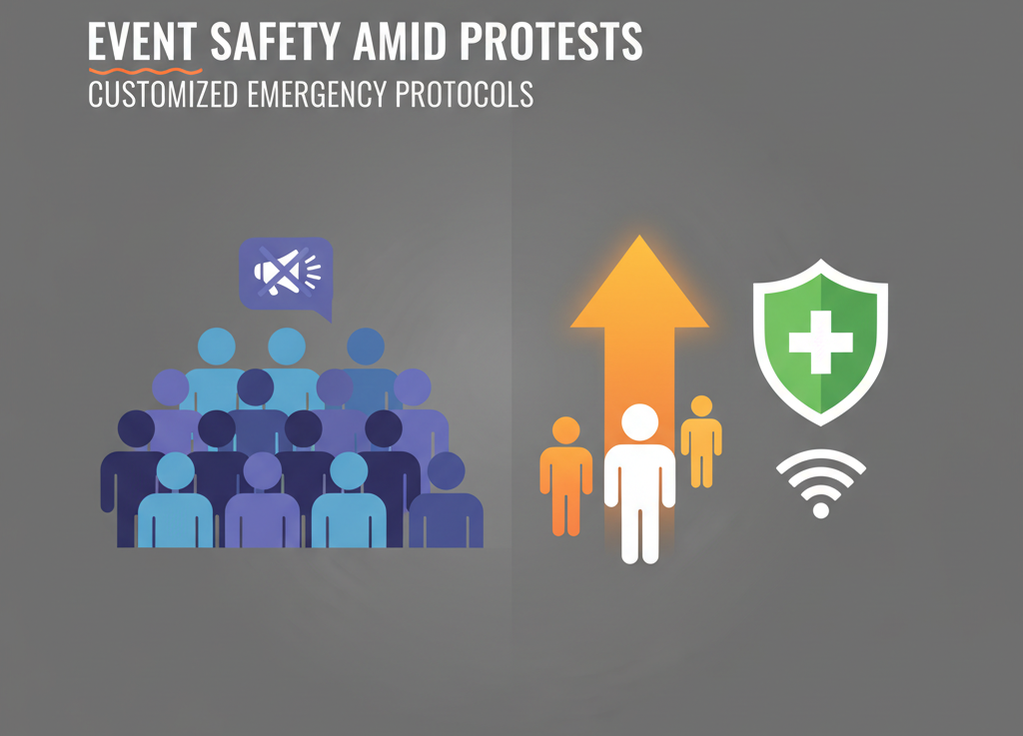
In recent years, protests have become a battleground of social change, but they often carry risks that extend beyond the intended message. Whether it’s a peaceful demonstration or an unexpected escalation, the safety of attendees can be compromised, often without warning. Customized emergency protocols are no longer a luxury; they are a necessity.
Key Takeaways
- Customized emergency protocols help organizers prepare for various protest scenarios, ensuring attendee safety and effective response.
- First responders benefit from incident command products that streamline communication and coordination during chaotic events.
- Attendees should avoid standing near immovable objects, as these can trap individuals during sudden disturbances.
- It's crucial for event staff to have a clear evacuation plan that is communicated to all participants before the event starts.
- Monitoring crowd dynamics and behavior can provide early warning signs of potential unrest, enabling proactive measures.
- Real-time alerts and updates can help keep attendees informed about changing conditions and safety protocols.
- Collaboration between event organizers and local law enforcement is essential for effective crisis management.
The Importance of Customized Protocols
Every protest is unique, shaped by its context, location, and participants. This unpredictability necessitates tailored emergency protocols that consider the specific risks associated with each event. For example, a protest in a densely populated urban area requires different safety measures than one held in a rural setting.
Organizers must assess potential threats, from minor disturbances to major riots, and design their emergency plans accordingly. Customized protocols not only enhance safety but also empower attendees with knowledge about what to do in various scenarios. This preparation can be lifesaving.
Enhancing First Responder Coordination
During protests, chaos can overwhelm first responders. To combat this, incident command products can serve as pivotal tools. These systems help organize responders, ensuring they can communicate effectively and respond swiftly to incidents. For example, utilizing a centralized communication platform enables teams to share real-time updates on crowd movements or potential threats.
The goal is to maintain order amid chaos. When responders are organized, they can prioritize tasks, allocate resources efficiently, and provide timely assistance to those in need. This level of preparedness not only enhances safety but also builds trust among the community and the authorities.
Practical Advice for Attendees
While event organizers play a crucial role in ensuring safety, individual attendees also share responsibility. Understanding personal safety measures can significantly reduce risks. For instance, positioning oneself away from immovable objects like walls or barricades provides options for escape if a situation escalates.
Additionally, staying aware of surroundings and recognizing early warning signs of unrest—such as sudden changes in crowd behavior—can be vital. Event staff should actively monitor the crowd and be trained to identify these signs, enabling them to alert attendees promptly.
Effective Communication During Events
Communication is the backbone of any emergency response. Attendees should receive real-time alerts regarding changes in safety protocols or potential threats. For example, if a protest escalates, an immediate notification can guide attendees to safer areas or advise them to shelter in place.
Moreover, having clear signage throughout the venue can guide attendees to exits and safe zones. This proactive approach minimizes confusion and maximizes safety during tumultuous situations.
Collaborating with Local Authorities
A successful safety plan involves collaboration between event organizers and local law enforcement. This partnership ensures that both parties are on the same page regarding safety protocols and crisis management strategies. Conducting joint training sessions can further solidify this relationship, allowing both groups to understand their roles during an emergency.
Local authorities can also provide valuable insights based on their experience with previous protests. This cooperation not only enhances safety but also fosters a sense of community trust.
Conclusion
As protests continue to shape our societal landscape, the importance of customized emergency protocols cannot be overstated. They are not just about managing risks but also about empowering individuals and communities to participate safely in the democratic process. The next time you attend a protest, remember that your safety is a collective effort—one that requires preparation, awareness, and collaboration. The message is powerful, but so is the need to ensure everyone can express it safely.