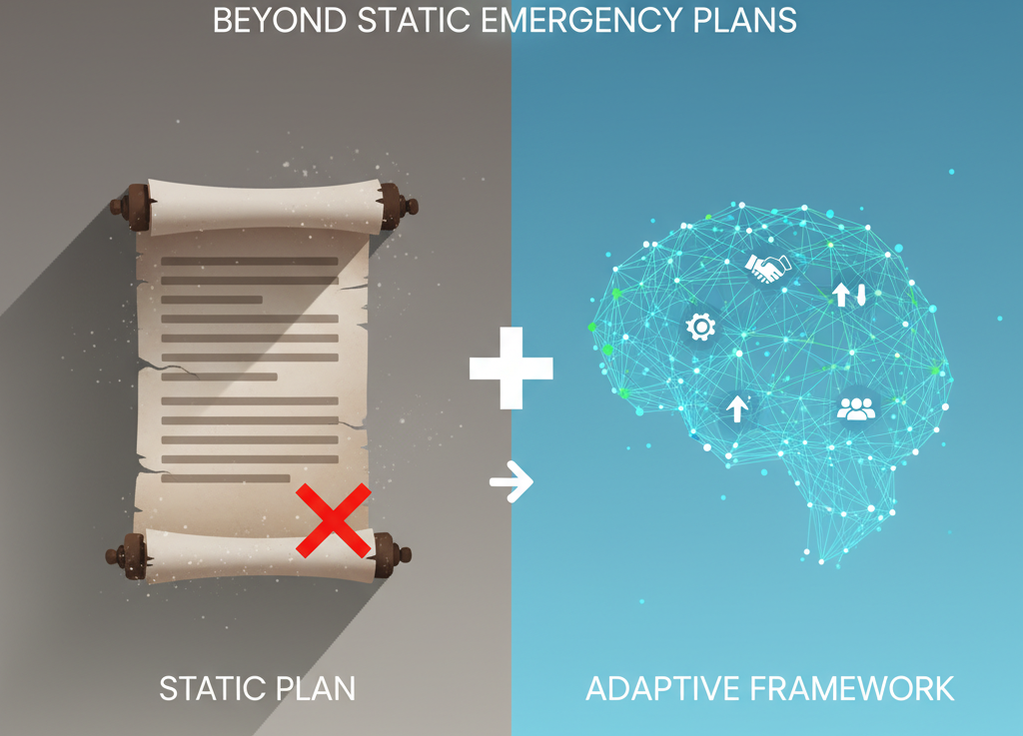
Adaptive Frameworks: Moving Beyond Static Emergency Plans
Lilla Odin
February 6, 2026
Adaptive Frameworks: Moving Beyond Static Emergency Plans
Imagine a community facing a natural disaster. The sirens wail, and the emergency plan sits dusty on the shelf. What went wrong? The static nature of traditional emergency plans often falls short in the face of real-world chaos. To bridge this gap, adaptive frameworks are emerging as a vital solution. These frameworks prioritize flexibility, collaboration, and continuous learning, offering a dynamic approach to emergency management.
Key Takeaways
- Adaptive governance frameworks emphasize flexibility in responding to emergencies, enabling quicker and more effective decision-making.
- Collaboration among stakeholders is crucial in adaptive frameworks, fostering communication between government agencies, NGOs, and the community.
- Continuous learning cycles allow for real-time updates to emergency plans, ensuring they remain relevant and effective over time.
- Technology tools, like GIS and data analytics, support adaptive frameworks by providing real-time information and insights during crises.
- Case studies from various regions show improved outcomes when communities implement adaptive frameworks over traditional static plans.
- Training and preparedness programs are essential in an adaptive framework, equipping stakeholders with the skills needed to respond effectively.
- Community engagement is a cornerstone of adaptive frameworks, enhancing resilience and trust among residents during emergencies.
The Shift from Static to Adaptive
Static emergency plans often resemble a one-size-fits-all approach, which is ineffective in the unpredictable nature of disasters. Adaptive frameworks, however, encourage a shift in mindset. They treat emergency management as an evolving process rather than a fixed protocol. By emphasizing flexibility, these frameworks allow communities to adapt their strategies based on ongoing assessments and emerging challenges.
For example, during the 2020 wildfires in Australia, local governments utilized adaptive frameworks to change evacuation routes and resource allocations based on real-time data from fire conditions. This responsiveness directly contributed to improved safety outcomes for affected populations.
Collaboration: The Heart of Adaptation
Collaboration is more than a buzzword in adaptive frameworks; it's essential. Emergency management today requires input from multiple stakeholders, including government agencies, non-profit organizations, and the communities themselves. Each group brings unique insights and capacities to the table.
Take the case of the Hurricane Harvey response in Houston. Agencies worked alongside local NGOs and volunteers to adapt plans on the fly. This collaboration ensured that resources were efficiently allocated and that the needs of the most vulnerable populations were met, demonstrating the power of shared knowledge and coordinated action.
The Role of Continuous Learning
Adaptive frameworks thrive on a culture of continuous learning. Rather than viewing the emergency plan as a static document, organizations can approach it as a living guide that evolves with experiences and insights gained from each crisis.
For instance, after the COVID-19 pandemic, several cities revised their public health emergency plans to incorporate lessons learned about communication and resource management. This iterative process not only improves future responses but also builds institutional resilience.
Leveraging Technology for Real-Time Adaptation
Technology is a game changer in the realm of adaptive frameworks. Geographic Information Systems (GIS), drones, and mobile applications provide real-time data that can inform decision-making during emergencies.
During the COVID-19 crisis, many municipalities used contact tracing apps to monitor outbreaks and inform the public. This kind of data-driven approach enhances situational awareness, allowing emergency managers to pivot strategies quickly and efficiently.
Engaging the Community
Community engagement is a cornerstone of adaptive frameworks. When residents actively participate in emergency planning, they feel a sense of ownership and responsibility. This involvement not only enhances trust but also equips communities with the knowledge needed to respond effectively during crises.
For example, communities that hold regular emergency drills foster a culture of preparedness. Residents become familiar with procedures and resources, making them more likely to act decisively when an emergency strikes.
Conclusion
As we move forward, the necessity of adaptive frameworks in emergency management cannot be overstated. The traditional static plans that once guided responses are no longer sufficient in an increasingly complex and unpredictable world. By embracing flexibility, collaboration, continuous learning, and community engagement, we can build resilient systems that not only respond to crises but also evolve with them. The challenge lies in our commitment to change and our willingness to embrace new paradigms. It's time to dust off those emergency plans and make them adaptable, because when the next crisis hits, we want to be ready.