6 Reasons Modern Dating Feels Harder
Lilla Odin
April 28, 2026
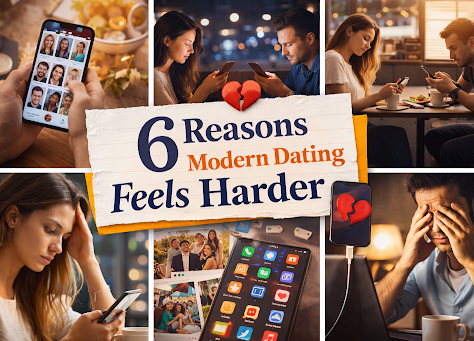
Imagine sitting across from someone on a first date, both of you smiling politely while your phones rest face down on the table. Later that night, you wonder if they liked you, replay the conversation in your head, and notice they’ve already updated their dating profile. In a world with endless swipes, constant notifications, and shifting relationship norms, dating can feel more complicated than ever.
While every generation has faced romantic challenges, modern dating brings its own unique pressures. Technology, cultural changes, and evolving expectations have transformed how people meet, connect, and commit. Below, we explore six reasons why dating today often feels harder than it used to.
Key Takeaways
- Dating apps create abundance but also decision fatigue.
- Social media fuels comparison and unrealistic expectations.
- Fear of vulnerability makes emotional intimacy harder.
- Busy lifestyles limit meaningful connections.
- Changing relationship norms creates confusion.
- High expectations can sabotage promising connections.
1. Too Many Options, Not Enough Clarity
Dating apps have expanded the pool of potential partners dramatically. On the surface, this seems like an advantage. More choices should increase the chances of finding the right person.
However, research on decision-making shows that too many options can lead to analysis paralysis. When there is always another profile to swipe, it becomes harder to fully invest in one person. The possibility that someone “better” might be one swipe away can undermine commitment before it even begins.
This abundance mindset can make dating feel less intentional and more transactional, leaving people unsure whether to settle into a connection or continue searching.
2. The Illusion of Perfection on Social Media
Social media plays a significant role in shaping romantic expectations. Carefully curated posts showcase surprise proposals, luxury vacations, and seemingly flawless relationships. Over time, these highlight reels can distort perceptions of what real love looks like.
When expectations are shaped by filtered images and viral relationship advice, ordinary moments may feel inadequate. Minor disagreements or imperfections can seem like red flags rather than natural parts of human connection.
Constant comparison can quietly raise standards to unrealistic levels, making genuine compatibility harder to recognize.
3. Fear of Vulnerability
Modern dating culture often emphasizes independence and emotional self-protection. While self-awareness and boundaries are healthy, an extreme fear of vulnerability can prevent meaningful intimacy.
Opening up requires risk. It means sharing insecurities, expressing needs, and allowing someone to see your flaws. In a fast-paced dating environment where ghosting is common, many people hesitate to fully invest emotionally.
This guarded approach may reduce short-term pain, but it also limits the depth of connection that long-term relationships require.
4. Busy and Fragmented Lifestyles
Work demands, side projects, social obligations, and digital distractions consume much of our time and energy. As a result, dating often competes with packed schedules and mental exhaustion.
Even when two people are interested in each other, inconsistent communication and limited availability can slow momentum. Texting replaces phone calls, and quick check-ins substitute for meaningful conversations.
Building intimacy requires time and attention. When both are in short supply, relationships can struggle to gain traction.
5. Changing Relationship Norms
Traditional relationship timelines have shifted. Marriage is happening later, career priorities often come first, and definitions of commitment vary widely.
While this flexibility allows individuals to design relationships that suit their values, it can also create confusion. One person may be dating casually, while the other is seeking long-term commitment. Without clear communication, mismatched expectations lead to frustration.
Additionally, terms like “situationship” and “exclusive but not official” reflect how relationship labels have become more fluid. For some, this freedom feels empowering. For others, it feels unstable and uncertain.
6. High Expectations for Compatibility
Today, many people seek a partner who fulfills multiple roles: best friend, emotional confidant, intellectual equal, financial contributor, travel companion, and more. While it is reasonable to desire compatibility, expecting one person to meet every need perfectly can create pressure.
Dating profiles often list detailed requirements, from lifestyle habits to personality traits. While standards are important, rigid checklists may cause promising connections to be dismissed too quickly.
Healthy relationships often grow through shared effort, compromise, and evolving understanding. Perfection is rarely present at the start.
How to Navigate Modern Dating More Mindfully
Although modern dating has challenges, it also offers opportunities for greater autonomy and intentionality. A few mindset shifts can make the experience feel less overwhelming.
- Focus on quality over quantity by limiting app usage and investing in meaningful conversations.
- Communicate expectations early to reduce confusion about intentions.
- Practice vulnerability gradually, allowing trust to build over time.
- Take breaks from dating apps when fatigue sets in.
- Remember that real relationships develop beyond curated images and instant chemistry.
Dating is not a competition or a performance. It is a process of mutual discovery.
Conclusion
Modern dating feels harder, not because love is impossible, but because the environment has changed. Endless options, social comparison, emotional guardedness, and shifting norms have created new complexities.
Yet beneath the swipes and screens, the fundamentals remain the same. People still seek connection, understanding, and companionship. By approaching dating with clarity, patience, and self-awareness, it becomes less about navigating chaos and more about building something genuine.
If dating feels exhausting, you are not alone. But meaningful relationships are still possible, even in a fast-moving digital world. Sometimes the key is not finding more options, but slowing down enough to truly see the one in front of you.