US Job Revisions: 1 Million Jobs Lost in 2025, Largest Decline in 20 Years
Asaf Biron
February 16, 2026
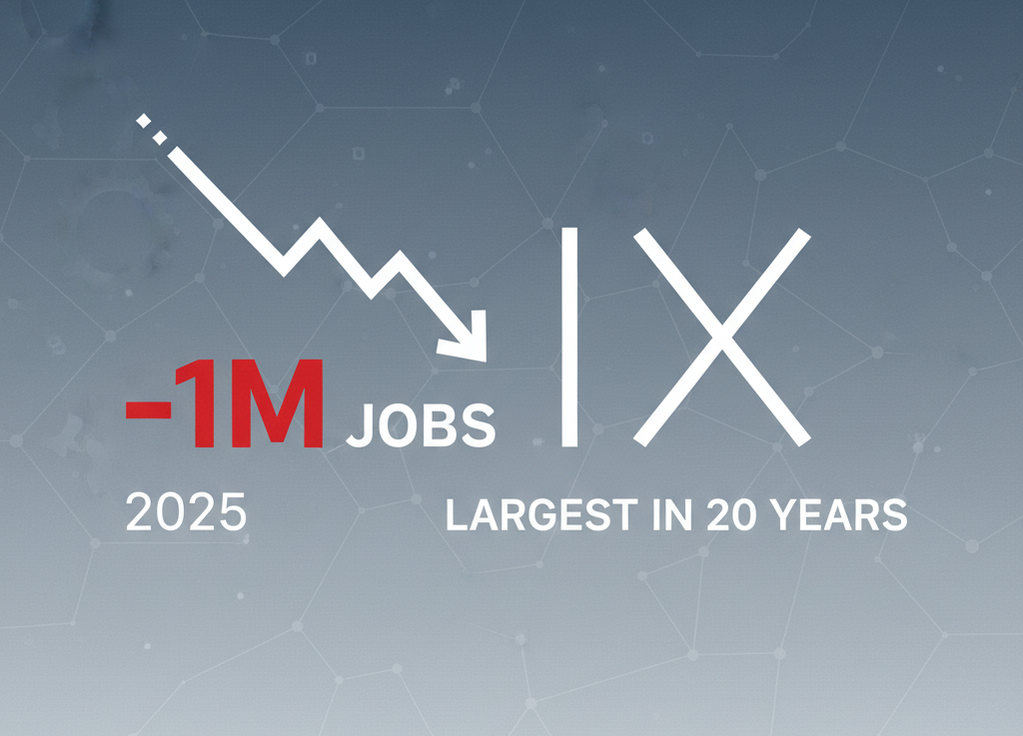
US Job Revisions: -1 Million Jobs in 2025, Largest in 20 Years
As the labor market evolves, new data reveals a startling forecast: the United States is set to revise its job numbers downward by a staggering one million in 2025. This marks the largest adjustment in two decades and raises critical questions about the state of the economy and the future of work. What factors are driving these revisions, and how should businesses and job seekers respond?
Key Takeaways
- The US economy is set to lose one million jobs by 2025, the largest revision in 20 years.
- These revisions stem from changing economic conditions and a recalibration of labor demand across various sectors.
- Industries such as technology, retail, and manufacturing are expected to experience the most significant job losses.
- Job seekers should focus on upskilling and reskilling to remain competitive in a shifting job landscape.
- Employers must adapt to the new reality by evaluating workforce needs and investing in employee development.
- The revised outlook emphasizes the importance of economic indicators and the need for proactive workforce planning.
Understanding the Job Revisions
Job revisions are not merely statistical adjustments; they reflect the intricate dance between economic forces and labor market dynamics. Analysts cite a combination of declining consumer demand, technological advancements, and shifts in global trade patterns as key drivers behind this forecast. As companies automate processes and embrace artificial intelligence, the demand for traditional roles diminishes.
For example, the retail sector, already grappling with the rise of e-commerce giants, faces further destabilization as automation becomes more prevalent. Stores are not just closing; entire categories of jobs are disappearing. The implications for workers are significant, especially for those in low-skill positions who have few options for transition.
The Impact on Various Industries
While the overall picture is daunting, some industries will feel the impact more acutely than others. The technology sector, despite its growth, is undergoing a transformation that could lead to unexpected job losses. As companies streamline their operations and invest in more advanced technologies, roles that were once considered secure may become obsolete.
Manufacturing, once a bastion of American employment, is also in flux. The ongoing trade war and supply chain disruptions have caused many manufacturers to rethink their labor needs. Jobs that require specialized skills may remain, but those that can be automated are at risk.
In contrast, sectors like healthcare and renewable energy may see growth, but they won’t offset the losses in other areas. This uneven landscape calls for a strategic approach from both job seekers and employers.
Preparing for the Future of Work
For job seekers, this revised outlook is a wake-up call. The skills that were once in demand may not be sufficient in the next few years. Upskilling and reskilling are no longer optional; they are necessities. Professionals are urged to embrace lifelong learning and explore opportunities in high-demand fields like data analysis, digital marketing, and cybersecurity.
Employers, on the other hand, need to reassess their workforce strategies. This isn’t just about cutting jobs; it’s about investing in the existing workforce to adapt to new realities. Companies that prioritize training and development will not only retain talent but also foster a more resilient business model.
The Broader Economic Context
The forthcoming job revisions also highlight the fragility of the current economic recovery. The pandemic exposed vulnerabilities in the labor market, and as we move toward a post-pandemic world, it’s clear that recovery will look different than previous cycles. The reliance on data and analytics will be crucial for businesses to navigate this uncertain terrain.
Furthermore, policymakers must take heed of these shifts. Labor market dynamics should inform decisions on education, infrastructure, and economic policy. A proactive approach can mitigate some of the negative impacts of these revisions, ensuring that workers are supported during transitions.
Conclusion
As the US prepares for a significant drop in job numbers, the landscape for workers and employers alike is changing rapidly. This is not just a statistic; it represents real lives and real challenges. For individuals in the workforce, the call to action is clear: adapt or risk becoming obsolete. Employers must take a hard look at their workforce strategies and invest in their teams. The future of work is here, and it demands a collective response.