AI Investments Fuel Chip Crisis and $3 Trillion Debt Surge
Alex Slavistki
February 16, 2026
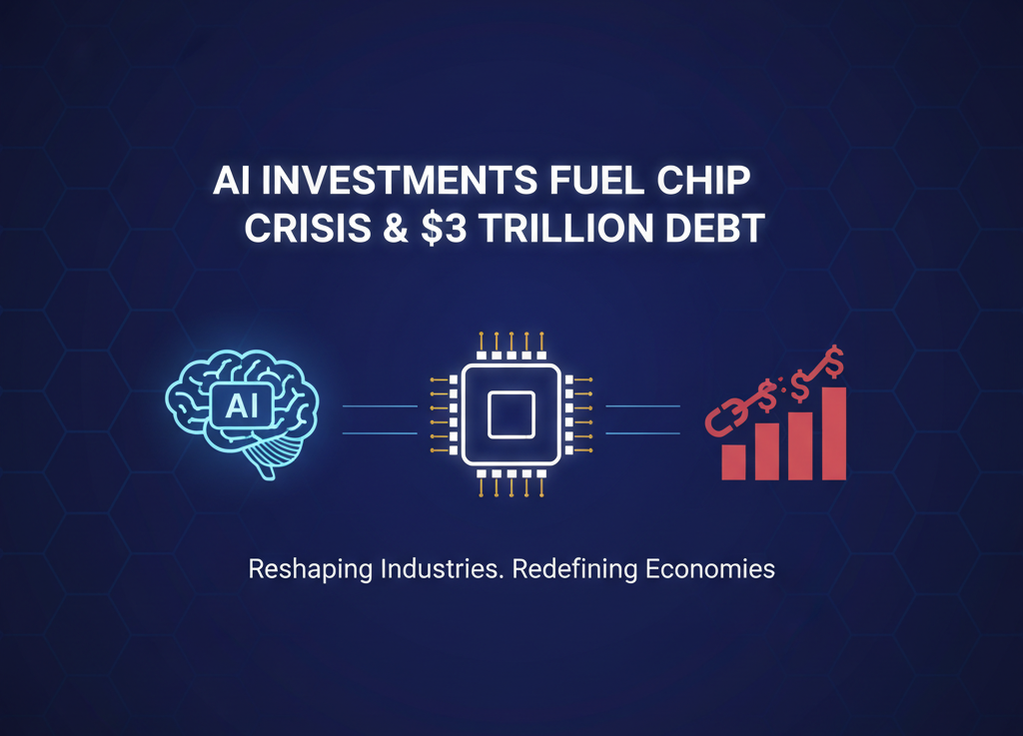
AI Investments Fuel Chip Crisis and $3 Trillion Debt Surge
The tech world is buzzing with the dual impact of artificial intelligence investments and a critical shortage of semiconductor chips. This intersection is not just reshaping industries; it’s also contributing to an alarming surge in national debt. As companies scramble to harness AI capabilities, they are faced with a chip crisis that could redefine supply chains, financial strategies, and economic landscapes.
Key Takeaways
- AI investments are driving unprecedented demand for semiconductor chips, exacerbating existing shortages.
- The global semiconductor market is projected to reach $1 trillion in revenue by 2030 due to AI-related applications.
- U.S. national debt has surged by $3 trillion, partly fueled by massive federal spending to support technology initiatives.
- Investment-grade bonds are projected to hit record-high volumes as institutions allocate funds to AI-driven sectors.
- The construction of AI facilities is increasingly focused on locations with abundant power supply rather than low land costs.
- Major corporations see AI as a gateway to innovation, leading to aggressive investment strategies that further strain chip availability.
- The financial landscape is shifting, with both individual and institutional investors leaning heavily into AI-focused assets.
The AI-Driven Chip Crisis
Artificial intelligence is more than a buzzword; it’s a transformational force. Companies across sectors are racing to integrate AI to enhance efficiency and drive innovation. However, this rush has intensified the demand for semiconductor chips, essential components for AI technologies. As tech giants ramp up production of AI systems, the existing chip shortages, already strained by the COVID-19 pandemic, are becoming increasingly dire.
For instance, NVIDIA, a leader in AI hardware, has witnessed a staggering increase in demand for its chips, leading to extended lead times for customers. The company’s stock price reflects this growth, surging as investors anticipate continued reliance on AI technologies. This scenario is not an outlier; it’s indicative of an industry-wide trend where the thirst for chips outpaces supply capabilities.
Debt Surge: An Economic Quagmire
With the U.S. national debt ballooning by $3 trillion, the interplay between AI investments and fiscal policy is drawing scrutiny. Much of this debt growth can be attributed to the federal government’s efforts to bolster technological infrastructure through stimulus packages. These investments are intended to spur innovation and create jobs, but they come at a steep price.
As the government allocates funds to support AI initiatives, the financial implications ripple through the economy. Increased debt can lead to higher interest rates and inflation, creating a precarious environment for future investments. Analysts warn that while investing in technology is crucial, the balance between fostering growth and managing debt is delicate.
The Future of Investments in AI
Institutional investors are increasingly recognizing the potential of AI technologies, leading to a significant shift in investment strategies. The fixed-income side of portfolios is becoming more AI-heavy, as investors seek to capitalize on the growth of technology-driven sectors. This trend is expected to push the investment-grade bond market to record-high volumes by 2026.
Furthermore, companies are not just investing in AI; they are also reevaluating their operational strategies. The next generation of AI facilities will prioritize locations with ample power supplies, moving away from traditional considerations like land costs. This strategic pivot highlights the critical role of energy infrastructure in the future of AI development.
The Broader Economic Impact
As AI continues to penetrate various industries, the ramifications extend beyond just technology. Startups and established companies alike are investing heavily in AI capabilities, leading to a dynamic shift in market strategies. For example, firms in logistics, healthcare, and finance are leveraging AI to streamline operations, reduce costs, and enhance customer experiences.
However, this aggressive pursuit of AI can lead to unintended consequences. Companies may overextend their resources, resulting in increased reliance on borrowed capital. The surge in debt may ultimately stifle innovation if firms prioritize short-term gains over sustainable growth.
Conclusion
The interplay between AI investments, the chip crisis, and mounting national debt presents a complex landscape for businesses and investors. As the world becomes increasingly reliant on AI technologies, the economic implications will continue to unfold. Companies must navigate this terrain carefully, balancing the urgent need for innovation with the realities of financial management. Those that can harness AI’s potential while maintaining fiscal responsibility will likely emerge as leaders in the next technological revolution. The challenge lies in ensuring that this revolution is sustainable and equitable for all.