Impact of US Partial Government Shutdown on Economic Growth
Asaf Biron
February 16, 2026
Impact of US Partial Government Shutdown on Economic Growth
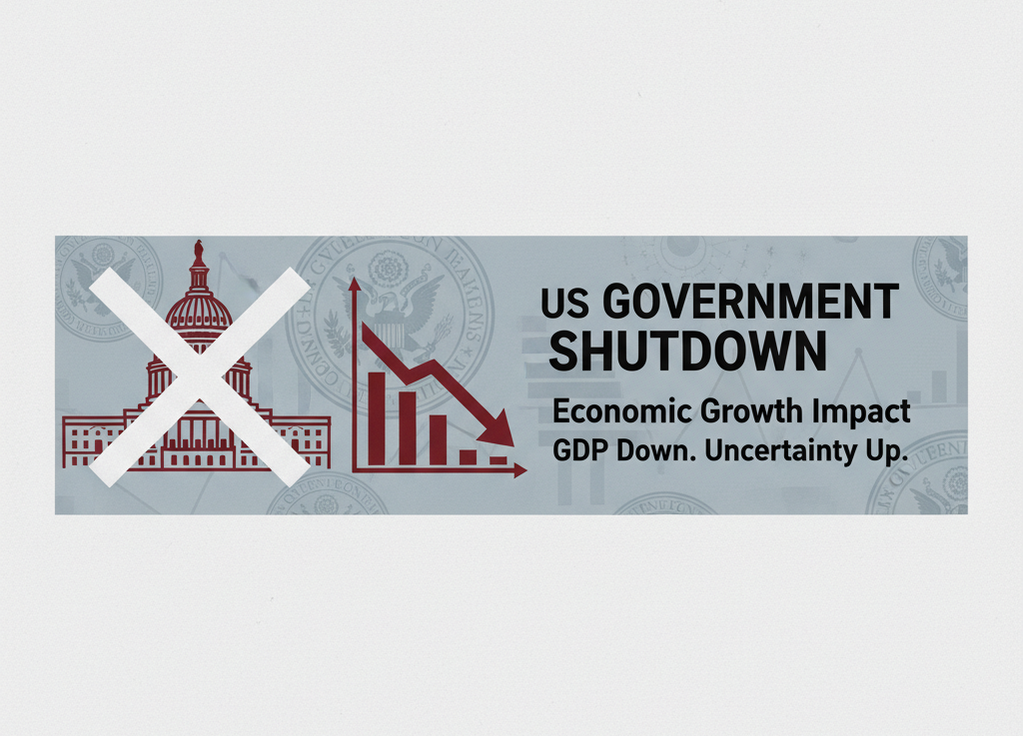
When the government grinds to a halt, the implications stretch far beyond the walls of Washington. A partial government shutdown not only disrupts federal operations but also casts a shadow over the economy. Recent estimates suggest that each week of such a shutdown could slice US GDP growth by 0.1 percentage points in the fourth quarter, reflecting a broader trend that reverberates through various sectors.
Key takeaways
- Each week of a government shutdown reduces US GDP growth by 0.1 percentage points in annualized terms.
- Consumer confidence typically declines during shutdowns, leading to reduced spending.
- Federal employees may face furloughs, impacting household income and spending power.
- Disruptions in federal services can delay contracts and impact businesses reliant on government operations.
- Market volatility often rises during shutdowns, affecting investment decisions.
- The cumulative effect of shutdowns can lead to long-term economic uncertainties.
- Historical data shows that previous shutdowns have had lasting impacts on economic growth.
The Economic Ripple Effect
Economic growth is not just about numbers on a report; it's about the livelihoods tied to those numbers. A government shutdown directly affects federal employees—those who may find themselves temporarily out of work. As these workers tighten their belts, consumer spending takes a hit. Fewer dollars spent in the economy can lead to a slowdown in retail, services, and a myriad of other sectors that depend on consumer confidence.
Consider the last significant shutdown in 2018-2019, which lasted 35 days. During that period, many federal employees were furloughed, leading to a drop in disposable income and a subsequent downturn in consumer spending. The National Economic Council estimated that this shutdown alone cost the economy roughly $11 billion, a clear indication of the potential severity of such interruptions.
The Investor Perspective
Investors keep a keen eye on political developments. The uncertainty created by a government shutdown often sends ripples through the stock market. When investors fear that government operations may be hampered, stock prices can become volatile. According to market analysts, during shutdowns, US stocks tend to underperform global counterparts, as confidence wanes and risk aversion rises.
For instance, during the aforementioned 2018-2019 shutdown, the S&P 500 experienced noticeable fluctuations, reflecting investor anxiety. The volatility can complicate investment decisions, as firms might delay capital expenditures or expansion plans until the political climate stabilizes.
Sector-Specific Impacts
Different sectors experience varying degrees of disruption during a shutdown. Industries heavily reliant on government contracts, such as defense or construction, may find themselves in limbo as projects stall. The delays in contract approvals and the inability to access federal resources can lead to cascading effects, delaying project completions and reducing revenues.
Moreover, sectors like tourism and hospitality, which often rely on federal services for permits and approvals, can see immediate impacts. The National Park Service, for instance, closes parks during shutdowns, affecting tourism revenue for local economies that depend on visitor spending.
The Long-Term Consequences
While the immediate effects of a government shutdown are tangible, the long-term ramifications can be more insidious. Businesses may adjust their forecasts for growth, leading to revised hiring plans and investment strategies. Economic uncertainty can breed caution among consumers and businesses alike, stunting growth.
The cumulative effect of repeated shutdowns also weighs heavily on the economy. Historical data indicates that prolonged or frequent interruptions can lead to reduced GDP growth rates over time. The specter of future shutdowns can create a climate of risk aversion where businesses hesitate to invest in expansion or innovation, hampering economic dynamism.
Conclusion
A partial government shutdown is more than a political stalemate; it’s a significant economic event with real consequences. As GDP growth estimates reflect, the costs of such shutdowns accumulate quickly, impacting everything from consumer confidence to sector performance. As businesses and individuals gear up for potential shutdowns, the challenge lies in navigating the uncertainty and mitigating the economic fallout. The next time the government stalls, remember: the economic repercussions are not just numbers—they’re lives impacted, businesses challenged, and futures uncertain.