Inflation Trends in February 2026: Progress or Persistent Risks?
Emile Bartow
February 16, 2026
Inflation Trends in February 2026: Progress or Persistent Risks?
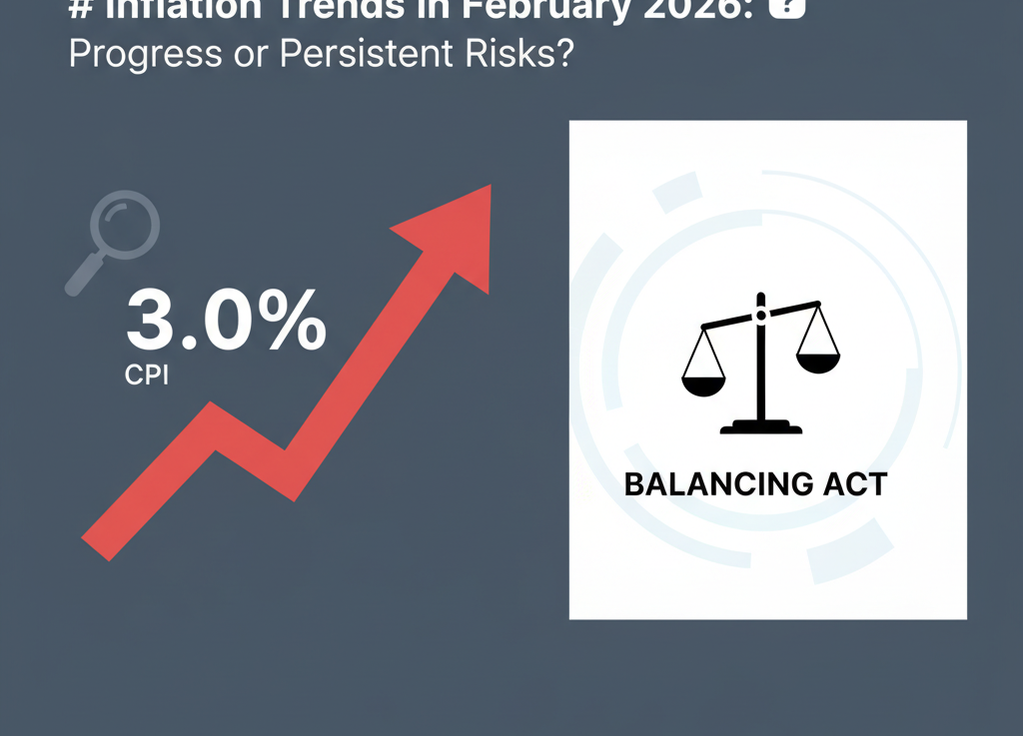
February 2026 is a month of reflection for economists and policymakers as they assess ongoing inflation trends. Despite widespread optimism a year ago regarding a decline in inflation rates, the reality has proven more complex. The Consumer Price Index (CPI) remains stubbornly at 3.0%, indicating that underlying factors need closer scrutiny. Is this a sign of progress, or are persistent risks lurking in the shadows?
Key Takeaways
- The Consumer Price Index (CPI) holds steady at 3.0% as of February 2026, contrary to expectations for a decline.
- Strong consumer demand and slow reductions in supply chain disruptions contribute to inflationary pressures.
- The economic activity rate has averaged around 4.1 million units, showing little change from previous years but with notable late-year increases.
- The demand for energy and technology, particularly in data centers supporting artificial intelligence, is driving inflation in specific sectors.
- Year-on-year inflation through January 2026 stands at 2.4%, suggesting some stabilization, yet still above desired targets.
- Employment levels remain robust, fueling consumer spending, which continues to exert upward pressure on prices.
- The Federal Reserve faces a balancing act between fostering growth and controlling inflation without triggering a recession.
Understanding Current Inflation Dynamics
The steady CPI of 3.0% could be interpreted as a sign of resilience in the economy, but it masks deeper issues. A year ago, many analysts predicted that inflation would decline as supply chain disruptions eased and consumer demand normalized. What they've encountered instead is a complex interplay of factors, with demand for goods and services outpacing supply in key areas. This situation is particularly pronounced in technology and energy sectors, where demand remains high due to the rise of artificial intelligence and data centers.
Supply chain hiccups have not fully resolved, leading to persistent bottlenecks. These issues are compounded by strong consumer spending, which has been buoyed by robust employment figures. The jobs market has remained resilient, with unemployment rates low, allowing consumers to continue spending. This trend feeds back into the inflationary cycle, creating a challenging environment for policymakers.
Sector-Specific Insights
Certain sectors are experiencing inflation at rates far above the average. Energy prices, for example, have surged due to increased demand as industries pivot towards greener technologies. The transition to renewable energy sources has led to higher prices for traditional fuels, affecting transportation and manufacturing costs.
Meanwhile, the technology sector is seeing a similar spike in prices. The demand for data centers—driven by the growing need for artificial intelligence capabilities—has soared. This has raised costs for everything from hardware to electricity, further contributing to inflation in the broader economy.
The Federal Reserve is acutely aware of these trends. As inflation hovers above target levels, the central bank must tread carefully. Any misstep could stifle growth or push inflation into uncharted territory, leading to a potential recession. The balancing act is precarious, with little room for error.
The Broader Economic Picture
A macroeconomic view reveals a mixed bag. While inflation remains a pressing concern, other indicators paint a more optimistic picture. Economic activity has averaged around 4.1 million units, with late-year sales seeing notable increases. This sluggish growth, however, hasn’t completely offset inflationary pressures.
Consumer behavior remains a critical factor. The continued strength in spending suggests confidence in the economy, yet it also raises questions about sustainability. As disposable incomes remain under pressure from rising prices, will consumers continue to spend at current rates? Or will they pull back, leading to a slowdown?
Looking Forward
As February 2026 progresses, the questions surrounding inflation become more pronounced. Are we witnessing the tail end of a challenging inflationary period, or is this a new normal? The interplay of strong consumer demand, sector-specific pressures, and broader economic conditions will dictate the path forward.
Policymakers must remain vigilant, weighing the risks of inflation against the need for sustained economic growth. For consumers and businesses alike, the challenge will be to navigate this uncertain landscape, adapting to changing conditions without sacrificing stability.
In the end, February 2026 could serve as a pivotal month, one that sets the stage for economic policies and consumer behavior in the years to come. The stakes are high, and the outcome remains to be seen. As the world watches, the question lingers: Is this progress, or are persistent risks just around the corner?