Managing Public Expectations During Crises: Essential Communication Strategies and Tips
Lilla Odin
February 6, 2026
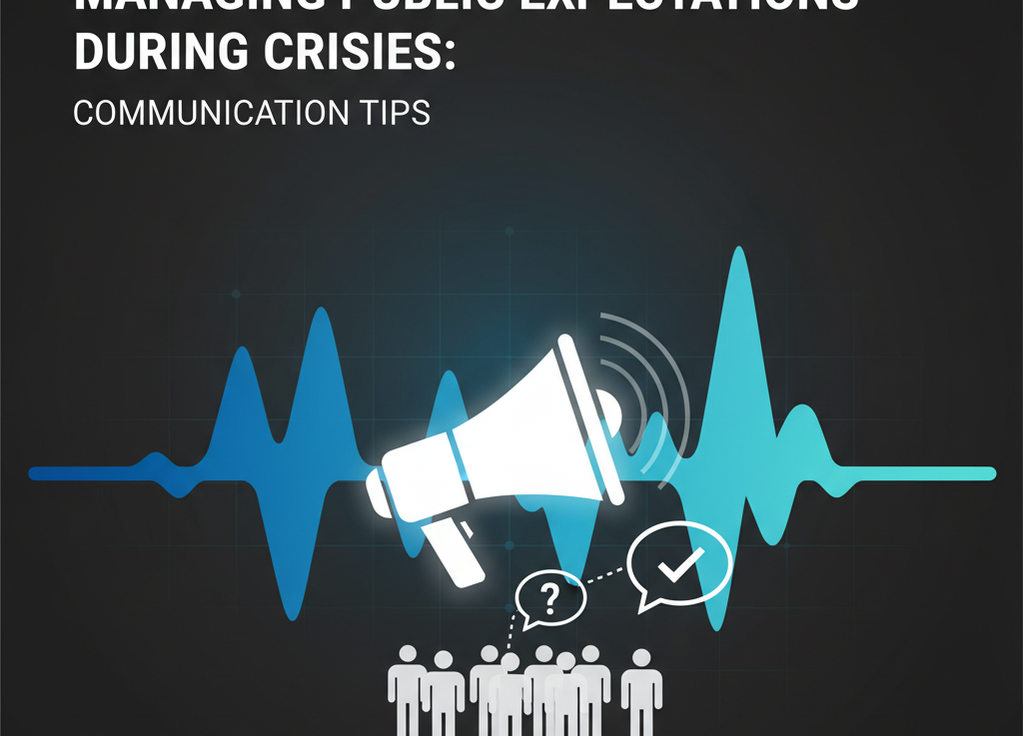
Managing Public Expectations During Crises: Communication Tips
Crisis situations can escalate quickly, and the way leaders manage communication during these moments can significantly impact public perception and trust. When things go sideways, people look for clarity, empathy, and guidance. The fine balance between transparency and maintaining control is crucial and often hinges on effective communication strategies.
Key Takeaways
- Engage actively with feedback: Public and employee feedback during crises provides critical insights and should be acknowledged and addressed.
- Demonstrate calmness: A composed demeanor helps to alleviate public panic and fosters a sense of unity.
- Utilize social media: Platforms like Twitter and Facebook can be powerful tools for disseminating real-time information and gathering public input.
- Prioritize transparency: Open lines of communication build trust, especially when leaders share both good and bad news candidly.
- Encourage public participation: Inviting the community to co-create messages fosters engagement and empowers them to contribute solutions.
- Prepare for the unexpected: Risk assessments should be thorough; anticipate potential pitfalls and formulate responses in advance.
- Follow up consistently: Regular updates create a sense of continuity and demonstrate that leaders are actively managing the situation.
The Power of Feedback
In the chaos of a crisis, the voices of employees, customers, and the public become invaluable. Listening to this feedback is not just a courtesy; it’s a survival strategy. For instance, during the COVID-19 pandemic, many organizations turned to employee surveys to gauge morale and concerns. This not only provided insights into workforce sentiment but also allowed leadership to adapt messaging and strategies accordingly.
Ignoring feedback can lead to misinformation and a disconnect between leadership and the public. Open channels for feedback—whether through social media, surveys, or town hall meetings—enable leaders to align their messages with the community's needs and concerns. For example, when local governments co-produced public messaging with community input, they often saw improved compliance with health measures.
The Importance of Calm Leadership
When crises unfold, a leader's demeanor can either escalate or de-escalate panic. A calm, confident presence reassures the public and fosters a sense of stability. Think of how New Zealand's Prime Minister Jacinda Ardern managed the COVID-19 response with a steady demeanor and clear, consistent communication. Her approach not only calmed fears but also inspired trust and unity among citizens.
Leaders should coordinate team responses and engage in strategic risk assessments to prepare for various scenarios. By demonstrating a well-organized approach, leaders can instill confidence that the situation is under control, even when it isn’t.
Leveraging Social Media
The rise of social media has transformed how information is shared during crises. Platforms like Twitter and Facebook allow for immediate dissemination of updates and real-time engagement with the public. During the early phases of the pandemic, many organizations utilized these platforms to share critical health information and respond to public inquiries.
Moreover, social media facilitates a two-way conversation. Instead of merely broadcasting messages, leaders can listen to the public's concerns and adjust their strategies accordingly. This engagement not only fosters trust but also empowers the community to participate in the solution, whether that involves sharing accurate information or complying with safety protocols.
Building Trust Through Transparency
Transparency is a cornerstone of effective crisis communication. When leaders share both the good and the bad, they build credibility. This was evident during various crises where leaders who openly discussed challenges, such as resource shortages or missteps, were often viewed more favorably than those who sugar-coated the situation.
Regular updates are essential to maintain public trust. It’s not just about the frequency of communication but also the content. Providing actionable information—like how to access resources or what steps are being taken to address the issues—creates a sense of collaboration between leaders and the community.
Fostering Community Engagement
Encouraging community participation can turn a crisis into an opportunity for collaboration. Leaders should invite the public to co-create solutions and messaging. For instance, during natural disasters, communities often organize volunteer efforts that foster a sense of solidarity and shared purpose.
By soliciting public ideas and feedback, leaders can harness the collective wisdom of their communities, making everyone feel invested in the outcome. This engagement can lead to innovative solutions that might not have been considered otherwise.
Conclusion
Managing public expectations during a crisis is both an art and a science. The interplay of feedback, calm leadership, social media dynamics, transparency, and community engagement can shape the narrative in powerful ways. As we look to the future, leaders must refine these communication strategies to not only navigate crises more effectively but also to emerge from them with stronger, more resilient communities. The next time a storm brews, remember: effective communication can be the lifeline that keeps everyone afloat.