How AI Actually Works (No Math Required)
Frankie Hurst
April 28, 2026
AI Learns Patterns From Data
Artificial intelligence sounds mysterious, but much of modern AI starts with a relatively simple idea: learning patterns from examples. Instead of programmers writing a separate rule for every possible situation, a machine-learning model is trained on data and adjusts itself to become better at a particular task. Show a system enough labeled examples of cats and dogs, for instance, and it can learn patterns that help distinguish new images. More advanced AI systems learn from enormous amounts of text, images, audio, or other data. They aren’t storing one simple rule for each example. Training adjusts large numbers of internal parameters that collectively allow the model to recognize and generate complex patterns.
Generative AI Predicts What Should Come Next
Tools that generate text work differently from a traditional search engine or database. A large language model processes text in small units called tokens and predicts likely subsequent tokens based on the context it has received and patterns learned during training. When you ask it a question, it generates a response step by step. Image generators use different techniques, but the basic idea is related: they learn patterns in visual data and use those patterns to produce new images based on instructions. This ability can produce remarkably convincing results, but it also explains an important limitation. AI can generate something that sounds completely plausible without guaranteeing that it is factually correct.
Training and Using AI Are Different Things
Building a modern AI model usually involves a training stage that can require enormous amounts of computing power. During training, the system repeatedly processes examples and adjusts its internal parameters to improve its performance. Once training is complete, people can interact with the resulting model. That everyday use is often called inference. Additional techniques can then make a model more useful, such as fine-tuning it for particular tasks, incorporating human feedback, or connecting it to external tools and information sources. This is why two products built around similar underlying AI technology can behave very differently depending on how they’ve been trained, configured, and connected to other systems.
AI Isn’t a Digital Human Brain
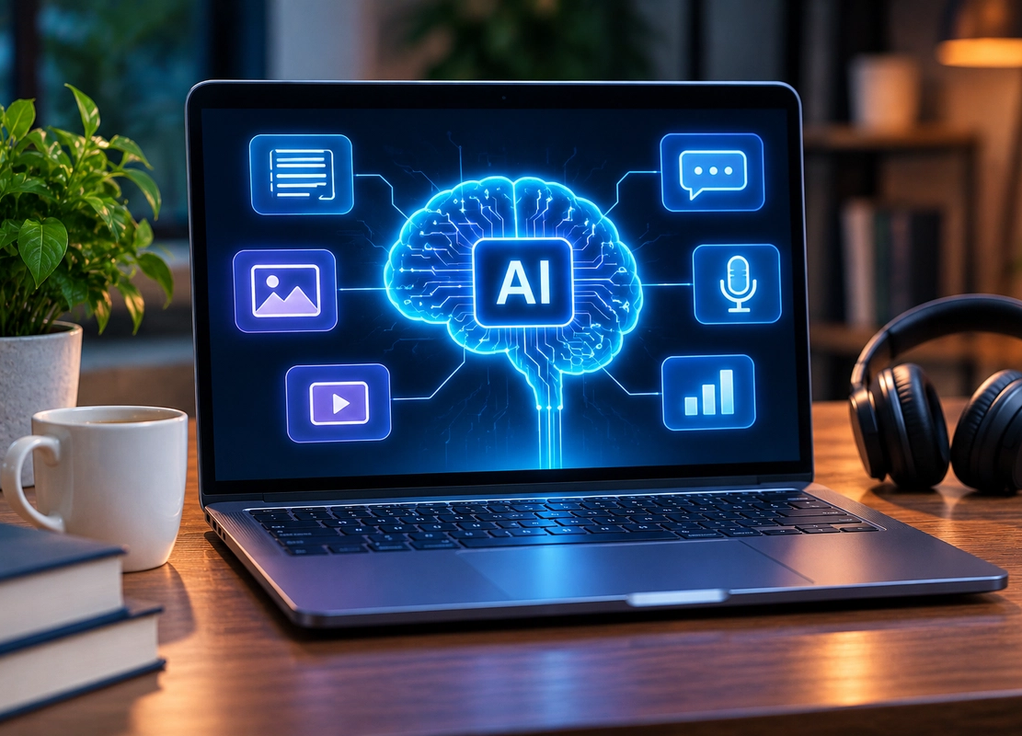
AI can write essays, generate images, recognize speech, analyze information, and perform tasks that once seemed uniquely human, but that doesn’t mean it thinks exactly like a person. Modern models operate through computational processes that learn and apply statistical patterns, and fluent language can make their capabilities seem more human-like than they necessarily are. They can misunderstand context, reproduce errors or biases, and confidently generate incorrect information. The easiest way to understand today’s AI is neither as magic nor as a simple database. It’s a powerful pattern-learning technology that can produce remarkably useful outputs—and one that still needs human judgment, especially when accuracy and consequences matter.