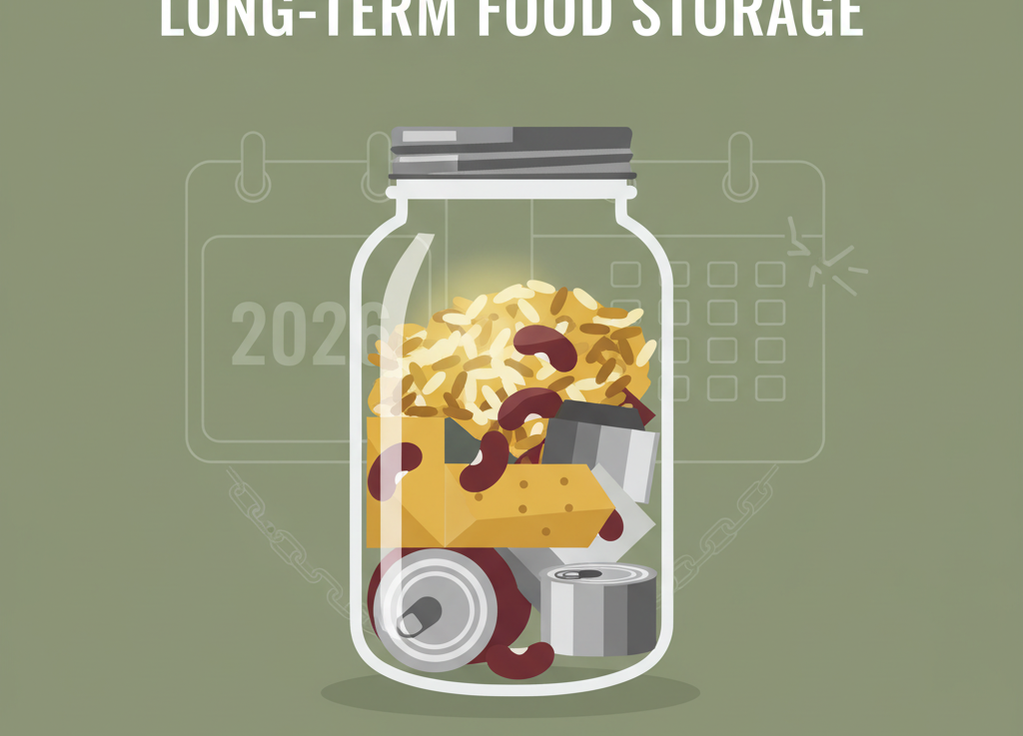
Long-Term Food Storage Strategies for 2026 Supply Disruptions
Mark
February 6, 2026
Long-Term Food Storage for 2026 Supply Disruptions
As the world grapples with ongoing supply chain challenges, the year 2026 looms large on the horizon. With predictions of potential economic instability and environmental factors affecting food production, the question arises: how prepared are you for food supply disruptions? The answer lies in effective long-term food storage.
Key Takeaways
- Long-term food storage can significantly mitigate the impact of future supply chain disruptions.
- Non-perishable food items like grains, legumes, and canned goods are ideal for storage.
- Proper storage conditions, including temperature and humidity control, extend food shelf life.
- Regularly rotating stock ensures that older items are consumed first, reducing waste.
- Investing in vacuum sealing and Mylar bags can protect food from moisture and pests.
- Dehydration and freeze-drying are effective methods for preserving fruits, vegetables, and meats.
- Establishing a community network can enhance resources and knowledge sharing for food preparedness.
Understanding Long-Term Food Storage
Long-term food storage isn't just about hoarding supplies; it's a strategic approach to ensuring that you and your family have access to food during emergencies. The disruptions in supply chains can stem from various factors: natural disasters, economic downturns, or geopolitical tensions. The goal is to create a safety net of food that can sustain you through tough times.
Choosing the Right Foods
When considering what to store, focus on non-perishable items. Grains like rice and oats, legumes such as beans and lentils, and canned goods are staples for any long-term storage plan. These items have long shelf lives and are versatile for meal preparation. Additionally, consider foods that your family enjoys to maintain morale during challenging periods.
Storing Foods Properly
Storage conditions play a crucial role in extending the lifespan of your food supplies. Ideal conditions include cool, dark, and dry environments. The temperature should ideally be below 70 degrees Fahrenheit, with low humidity levels. For optimal results, use airtight containers to keep out moisture and pests. Vacuum sealing and Mylar bags are excellent tools for this purpose, ensuring that your food remains fresh for years.
Rotating Your Stock
One of the most common mistakes in food storage is failing to rotate stock. Implementing a first-in, first-out (FIFO) method helps ensure that older items are consumed before they expire. Regularly check your supplies, replacing items as necessary. This practice not only reduces waste but also helps maintain an understanding of what you have on hand.
Preservation Techniques
Beyond simply storing food, consider preservation methods like dehydration and freeze-drying. Dehydrating fruits, vegetables, and meats reduces their moisture content, which inhibits bacterial growth. Freeze-drying, though more equipment-intensive, retains much of the food's nutritional value and flavor. With these techniques, you can create a diverse array of food options for your long-term storage.
Building a Community Network
Food preparedness shouldn't be a solo venture. Establishing a community network can amplify resources and knowledge sharing. Engaging with local groups focused on food preservation, storage, and preparedness can provide valuable insights and practical tips. This collaborative approach not only enhances individual preparedness but also fosters a sense of community resilience.
Conclusion
As we look toward 2026, the question isn’t just about what will happen next; it's about how prepared we are to navigate the uncertainties ahead. Long-term food storage is not merely a precaution; it's a proactive strategy that empowers individuals and families to thrive, even in adversity. Start today by assessing your current food supplies, exploring preservation techniques, and connecting with your community. In an unpredictable world, your preparedness can make all the difference.