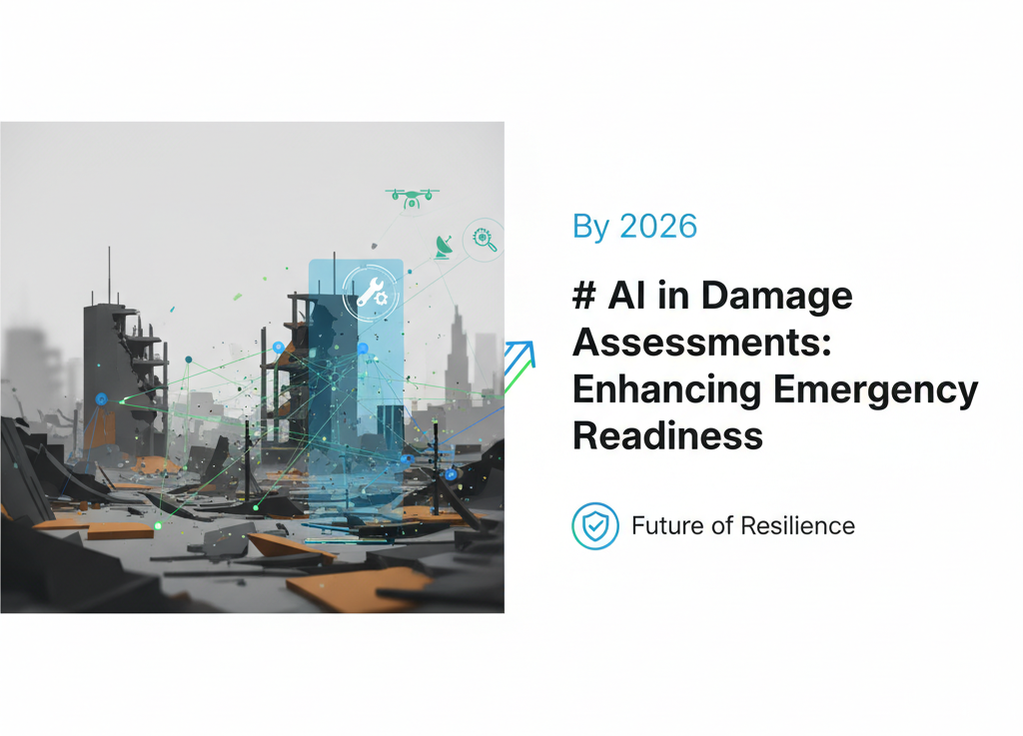
AI in Damage Assessments: Enhancing Emergency Readiness for 2026
Sam Bitton
February 6, 2026
AI in Damage Assessments: Enhancing Emergency Readiness for 2026
Imagine a world where natural disasters are met with rapid and precise responses, where damage assessments are not only faster but also more accurate, significantly minimizing the chaos that often follows calamities. This is not just a dream; it’s on the horizon with the integration of artificial intelligence in damage assessments by 2026. The potential of AI to transform emergency readiness is profound, and as we move closer to this date, the urgency to harness these technologies becomes ever more crucial.
Key Takeaways
- AI tools can analyze satellite imagery and drone footage to assess damage in real-time, providing accurate reports within hours of a disaster.
- Machine learning algorithms can predict potential disaster areas by analyzing historical data, improving preparedness in vulnerable regions.
- Automating damage assessments with AI reduces human error and increases efficiency, allowing emergency responders to focus on critical needs.
- Real-time data analytics help in resource allocation, ensuring that aid reaches the most affected areas promptly.
- Advanced AI models are capable of simulating disaster scenarios, enabling better training for emergency response teams.
- Collaborative platforms utilizing AI can facilitate communication between agencies, enhancing coordination during crises.
- By 2026, AI-driven damage assessments will be a standard practice, significantly enhancing community resilience against disasters.
The Role of AI in Damage Assessments
Artificial intelligence is reshaping how we conduct damage assessments following natural disasters. Traditional methods often involve ground-level inspections, which can be time-consuming and inefficient. AI changes the game by leveraging advanced technologies like satellite imagery, drones, and machine learning to provide immediate insights into the extent of damage.
For instance, after a hurricane, AI tools can quickly analyze aerial images to identify damaged structures and assess the severity of destruction. These tools can produce reports within hours, allowing emergency response teams to prioritize their efforts effectively. This speed can mean the difference between life and death, especially in the critical first hours after a disaster strikes.
Predictive Analytics: A Game Changer for Preparedness
The predictive capabilities of AI are equally compelling. By analyzing historical data, weather patterns, and geographical vulnerabilities, AI can forecast potential disaster areas. This predictive analysis enables local governments and emergency services to allocate resources more strategically, ensuring that preventative measures are in place before disaster strikes.
For example, machine learning models can identify regions that are at a higher risk of flooding based on past events and current climate data. This allows municipalities to implement better drainage systems or conduct community outreach programs that educate residents on emergency preparedness.
Enhancing Efficiency Through Automation
The automation of damage assessments is another critical benefit of AI integration. Human assessments are prone to error, especially under stressful conditions during a disaster response. AI tools can analyze data with greater accuracy and consistency, freeing up human responders to focus on immediate needs, such as providing medical assistance or evacuating vulnerable populations.
Moreover, automated systems can continuously learn and improve from new data inputs, refining their assessments over time. This adaptability ensures that emergency response strategies remain relevant and effective as conditions change.
Real-Time Analytics: Making Informed Decisions
In the chaos following a disaster, real-time data analytics are vital. AI can process vast amounts of information from various sources, such as social media feeds, emergency calls, and sensor data, to provide a clear picture of the situation. This information helps responders make informed decisions quickly, optimizing the allocation of resources to areas that need it most.
For example, during a wildfire, AI can analyze heat maps and wind patterns to predict the fire's path, allowing teams to deploy resources ahead of the flames and evacuate residents safely. This level of preparedness is crucial in mitigating the impact of disasters.
Collaboration and Communication in Crisis Management
AI doesn’t just enhance individual assessments; it can also improve collaboration between agencies. Platforms that harness AI technology can facilitate communication and information sharing among local, state, and federal agencies. This interconnectedness enhances coordination, ensuring that efforts are not duplicated and that resources are efficiently utilized.
By fostering a collaborative environment, AI tools enable a more unified approach to disaster response, ultimately leading to quicker recovery and rebuilding efforts.
Conclusion
As we look toward 2026, the promise of AI in damage assessments is clear. The integration of these technologies will not only enhance emergency readiness but also redefine how communities respond to and recover from disasters. Embracing these innovations requires a commitment from governments, agencies, and organizations to invest in the necessary infrastructure and training. The stakes are high; the lives and livelihoods of countless individuals depend on our ability to prepare for the challenges ahead. The future is bright with AI, and it’s time to harness its potential to build resilience against the inevitable disasters that await us.