Broadening Equity Participation: Beyond Tech in 2026 Markets
Emile Bartow
February 16, 2026
Broadening Equity Participation: Beyond Tech in 2026 Markets
As we march toward 2026, the conversation around equity participation is evolving rapidly. While technology stocks have long dominated the landscape, a broader array of sectors is emerging as viable players in the equity markets. Investors who cling solely to tech are risking missing out on opportunities that could define the next phase of market growth.
Key Takeaways
- Equity participation is expanding beyond technology stocks, driven by diverse sectors.
- Fiscal expansion in major economies supports a global economic rebound and broader market participation.
- Increased focus on sustainable investing is reshaping traditional equity strategies.
- Global diversification becomes essential as investors seek growth outside U.S. tech.
- Emerging markets offer unique opportunities for equity participation amid evolving economic landscapes.
- Investors increasingly prioritize companies with strong environmental, social, and governance (ESG) practices.
- Sector rotation strategies will play a crucial role in navigating market volatility.
The Shift from Tech Dominance
For years, tech stocks have been the juggernaut of equity markets, enticing investors with their rapid growth and innovation. However, as we look toward 2026, this narrative is shifting. A mix of fiscal policies from leading economies is laying the groundwork for a more balanced market. The fiscal expansions in the United States, Europe, and parts of Asia are injecting capital into the economy, which is expected to stimulate growth across various sectors.
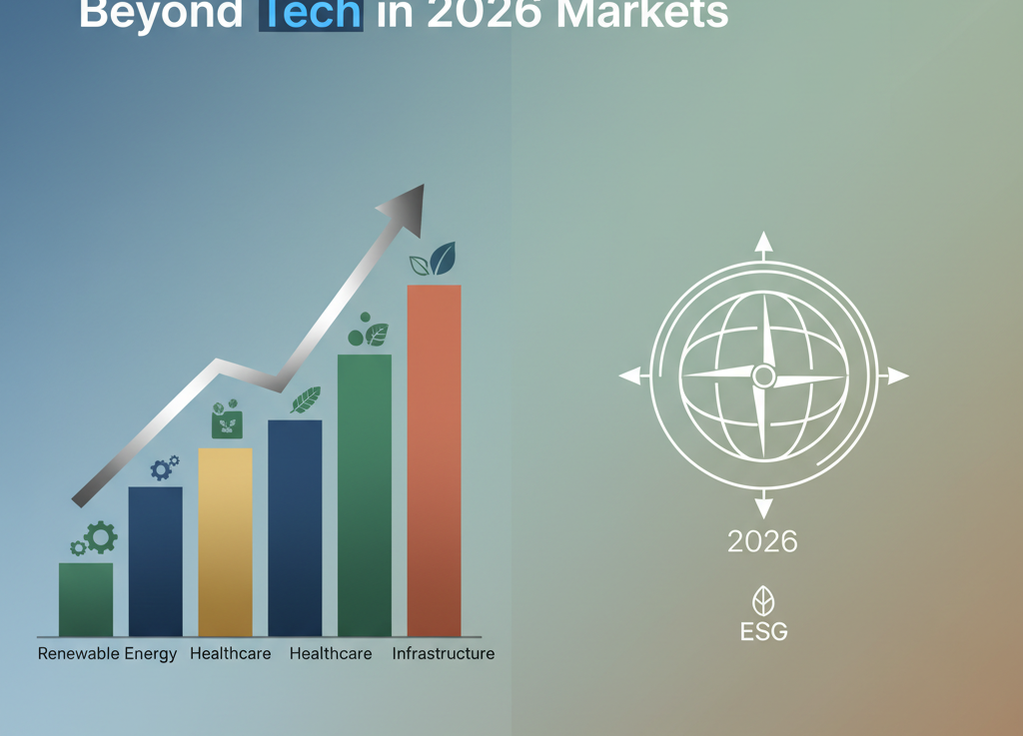
Industries like renewable energy, healthcare, and infrastructure are poised to benefit from this trend. For instance, the renewable energy sector is not just a fad; it’s gaining momentum and attracting significant investment. Global initiatives towards decarbonization are pressing companies to innovate, thus creating new equity opportunities outside traditional tech.
The Role of Sustainable Investing
Sustainable investing is reshaping how equity markets function. Investors are increasingly aligning their portfolios with their values, seeking companies that prioritize environmental and social governance. This shift is not merely ideological but financial; firms with robust ESG practices tend to offer better risk-adjusted returns over time.
The MSCI ACWI index shows that companies with high ESG scores outperformed their peers in recent years. This trend indicates that a growing number of investors are willing to pay a premium for businesses that operate responsibly. It’s a clear signal: equity participation is not just about profits anymore; it’s about purpose.
Global Diversification: A Necessity
Investors looking to broaden their equity participation must consider global diversification. While U.S. equities remain favored, neglecting international markets could be a misstep. Regions like Southeast Asia and Latin America are ripe with opportunities, especially as they rebound post-pandemic.
For instance, Vietnam's burgeoning manufacturing sector and Brazil's agricultural exports are gaining traction among investors. The global economic landscape is changing, and those who invest outside their home turf may reap significant rewards.
Emerging markets have their complexities, but with risk comes opportunity. Companies in these regions can provide growth avenues that are less correlated with U.S. markets, offering a buffer against local economic downturns.
The Power of Sector Rotation Strategies
Navigating the diversity of sectors will require intelligent investment strategies. Sector rotation strategies—shifting investments from one sector to another based on macroeconomic trends—are becoming increasingly relevant.
As inflation concerns ebb and flow, sectors like consumer staples and utilities may gain favor while tech stocks see volatility. Investors who can anticipate these shifts and adjust their portfolios accordingly stand to benefit. It’s a dynamic environment, and flexibility is key.
Conclusion: Embrace the Future of Equity Participation
Broadening equity participation in 2026 markets is not just about expanding beyond tech; it's about embracing a holistic view of the investment landscape. As fiscal policies foster growth in diverse sectors, and sustainability becomes central to investing, the opportunities are vast.
Investors are challenged to adapt, to look beyond traditional sectors, and to embrace the new market dynamics. Those who remain agile and informed will find themselves at the forefront of a market that is not just recovering but evolving. The future is here—are you ready to seize it?